
Short Answer
The Jackson‑Harmsworth Polar Expedition (1894–1897) was a British-sponsored venture that undertook the first systematic exploration of the high‑Arctic archipelago of Franz Josef Land. Under the command of Lieutenant‑Colonel Frederick George Jackson, the party spent three summer seasons mapping coastlines, conducting scientific observations, and establishing winter bases. Although the expedition did not locate a route to the North Pole, it confirmed that Franz Josef Land comprised a true archipelago and demonstrated that fresh meat could prevent scurvy, a breakthrough that altered later expedition nutrition.
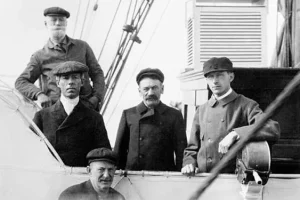
Jackson’s expedition intersected with the legendary Fram journey of Fridtjof Nansen when the two parties met at Cape Flora on Northbrook Island in 1896. This encounter cemented the expedition’s place in polar history and highlighted the collaborative spirit among late‑19th‑century explorers.
Who Was Frederick George Jackson / The Expedition
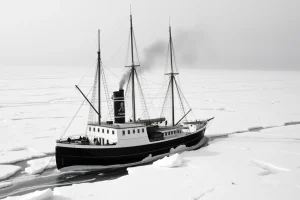
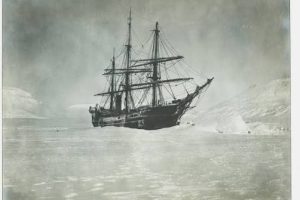
Frederick George Jackson (1860–1938) was a Royal Navy officer and seasoned Arctic explorer. Prior to the 1894 venture he had served on several Arctic voyages, including a 1881 attempt to reach the North Pole with the steamship Alert. The Jackson‑Harmsworth Expedition was financed principally by newspaper magnate Alfred Harmsworth (later Lord Northcliffe), whose patronage enabled the purchase of equipment, provisions, and the expedition’s modest vessel, the S.S. Jackson. The core team comprised a small cadre of officers, scientists, and support personnel, among them geologist William J. L. Wharton, zoologist Henry A. Henderson, and the experienced sledge‑master William S. Green.
Objectives
The expedition’s stated aims were threefold:
- Geographic: to chart the uncharted coasts of Franz Josef Land, determine its true extent, and resolve whether the landmass was a single island or a group of islands.
- Scientific: to collect geological, meteorological, and biological data, including marine sediment samples and observations of Arctic fauna.
- Exploratory: to test logistical innovations such as the use of ponies for sled haulage and a diet enriched with fresh seal and polar bear meat to combat scurvy.
Route
Departing from Liverpool in May 1894, the expedition sailed northward via the Norwegian Sea, entered the Barents Sea, and reached the southern coast of Franz Josef Land in early August. The party established a base at Cape Flora on Northbrook Island, where they overwintered from 1894 to 1895. From this depot they launched a series of sledge journeys in the summers of 1895, 1896, and 1897, reaching as far north as Rudolf Island (Ostrov Rudolfa) and as far east as Hall Island. The return voyage left the archipelago in August 1897, arriving back in England in October.
Timeline
| Date | Event |
|---|---|
| May 1894 | Expedition departs Liverpool aboard the S.S. Jackson. |
| 5 August 1894 | First landfall on Franz Josef Land; establishment of winter camp at Cape Flora, Northbrook Island. |
| June 1895 | First summer sledge survey; mapping of southern islands and discovery of several previously unknown capes. |
| June 1896 | Encounter with Fridtjof Nansen’s Fram party at Cape Flora; exchange of scientific data. |
| July 1896 | Introduction of ponies for sled haulage; successful transport of supplies across ice domes. |
| June 1897 | Final summer survey; confirmation that Franz Josef Land is an archipelago. |
| August 1897 | Departure from Franz Josef Land; return to England. |
The Franz Josef Land Connection
Jackson’s parties landed on numerous islands, including Northbrook, Rudolf, Hall, and Ziegler Islands. Their detailed surveys corrected earlier maps that depicted the region as a single landmass. The expedition’s cartographic output was incorporated into the Royal Geographical Society’s 1898 atlas, establishing the modern outline of Franz Josef Land that persists today. The use of fresh seal and polar bear meat, taken from local fauna, demonstrated a practical solution to scurvy that Nansen later adopted on his own Arctic ventures.
Challenges and Hardships
The expedition faced the typical hardships of high‑Arctic travel: severe cold, unpredictable pack ice, and limited daylight during the long polar night. Supply shortages were mitigated by hunting local seals, but the team still suffered bouts of frostbite and minor cases of scurvy before the fresh‑meat regimen proved effective. The dense ice fields around the western islands delayed sledge progress, and a storm in March 1896 destroyed part of the Cape Flora depot, forcing the party to rely on emergency caches.
Discoveries and Achievements
Jackson’s most significant geographic contribution was the confirmation that Franz Josef Land consists of roughly 190 islands, a fact that reshaped Arctic cartography. The expedition also produced the first systematic geological observations of Jurassic–Cretaceous marine sediments and basaltic table mountains within the archipelago. Scientifically, the team recorded meteorological data that extended the polar weather record back to 1894, and they documented abundant wildlife, including polar bears, walruses, and the now‑rare ivory gull. Their logistical innovations—ponies for haulage and a fresh‑meat diet—were later adopted by the 1909–1912 Ziegler–Fiala expedition and the 1914–1915 Imperial Trans‑Arctic Expedition.
Outcome and Fate
The expedition concluded in October 1897 with the safe return of all personnel to England. Jackson published a comprehensive account, A Thousand Miles in the Arctic (1900), which included maps, scientific tables, and vivid descriptions of the Arctic environment. The data gathered laid the groundwork for subsequent Soviet surveys in the 1920s and 1930s, and many of the place names assigned by Jackson remain in use.
Historical Significance
Historians regard the Jackson‑Harmsworth Expedition as a turning point in polar exploration. It demonstrated that thorough pre‑expedition planning, concern for crew health, and scientific rigor could overcome the extreme challenges of the high Arctic. The expedition’s emphasis on nutrition directly influenced Nansen’s later successful Fram expedition and set a precedent for future Arctic logistics. Moreover, Jackson’s meticulous cartography established the baseline for all modern maps of Franz Josef Land.
Primary Sources
The expedition’s primary documentary legacy consists of Jackson’s published narrative, the original field diaries of Henderson and Wharton, and a collection of over 300 photographic plates housed at the Royal Geographical Society. The expedition’s original maps, reproduced in the Society’s 1898 atlas, are also preserved in the British Library’s Arctic manuscript collection. These sources provide detailed accounts of daily life, scientific observations, and the logistical decisions that defined the venture.
Related Expeditions
Jackson’s work directly preceded and informed several later Arctic ventures. The 1898–1900 Baldwin–Ziegler Expedition built upon his cartographic data, while the 1909–1912 Ziegler–Fiala Expedition adopted his pony‑haulage technique. The 1914–1915 Duke of the Abruzzi’s march across Rudolf Island retraced Jackson’s routes, and the Soviet 1930s surveys used his maps as a reference framework. The meeting with Nansen at Cape Flora also forged a collaborative link that would benefit the 1899 Fram expedition.
FAQ
Did the Jackson‑Harmsworth Expedition reach the North Pole?
No. The expedition focused on surveying Franz Josef Land and did not attempt a poleward push beyond the archipelago.
How did the expedition prevent scurvy among its crew?
Jackson introduced a diet that included fresh seal and polar bear meat, which provided sufficient vitamin C to prevent scurvy.
What was the significance of using ponies for haulage?
Ponies proved capable of pulling sledges over ice and snow, offering a more reliable and stronger means of transport than dogs alone in the high Arctic.


Leave a Reply