The Tegetthoff Expedition to Franz Josef Land

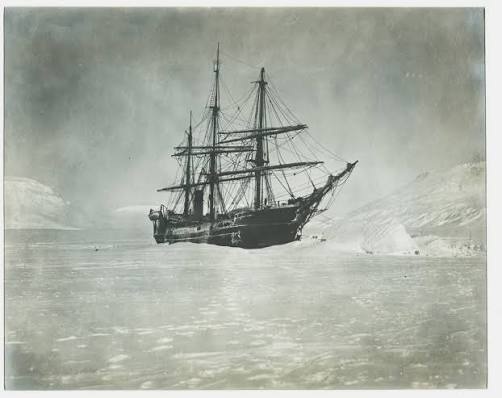
The Tegetthoff Expedition (1872–1874) was the Austro‑Hungarian North‑Pole venture led by Karl Weyprecht and Julius Payer aboard the steam‑assisted barkentine Tegetthoff. Trapped in Arctic pack ice, the ship drifted into the previously unknown Franz Josef Land archipelago, which the expedition discovered and partially mapped in August 1873. The journey provided the first reliable cartographic record of the islands and demonstrated the feasibility of steam‑powered polar navigation.

Read More →

Fiala‑Ziegler Expedition (1903–1905)

The Fiala‑Ziegler Expedition (1903–1905) was an American‑financed attempt to reach the North Pole, led by photographer‑explorer Anthony Fiala and sponsored by industrialist William Ziegler. Operating from Franz Josef Land, the party endured two Arctic winters after their ship America was crushed by ice, yet all but one member survived and produced valuable cartographic and scientific data.

Read More →

Glacier Change in Franz Josef Land

Franz Josef Land’s glaciers have accelerated their mass loss in the past decade, with thinning rates up to 10 m yr⁻¹ and a doubling of ice loss between 2011 and 2015. The change is driven by rapid Arctic warming, oceanic heat, and spatially variable precipitation, posing implications for sea‑level rise and regional ecosystems.

Read More →

The Baldwin‑Ziegler Polar Expedition (1901‑1902)

The Baldwin‑Ziegler Polar Expedition (1901‑1902) was an American‑financed attempt to reach the North Pole from Franz Josef Land, led by meteorologist Evelyn Briggs Baldwin. Backed by industrialist William Ziegler, the venture employed three steam ships, a large complement of dogs, ponies, and experimental communication balloons, but failed to achieve its primary goal and ended in controversy.

Read More →

Seabirds of Franz Josef Land

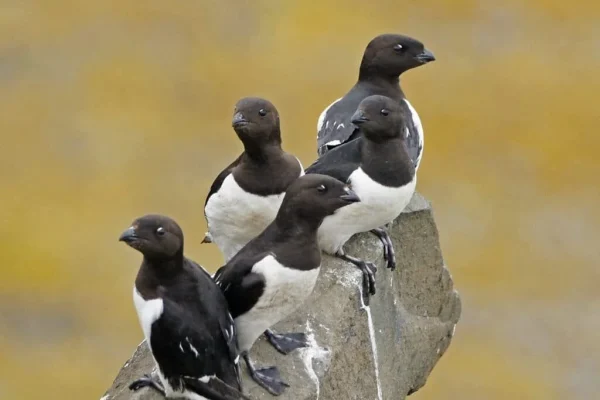
Franz Josef Land hosts some of the Arctic’s most important seabird colonies, including the world‑largest ivory gull nesting sites and extensive cliffs for little auks, guillemots and kittiwakes. These birds breed on ice‑free ledges, cliffs and tundra during the brief summer, linking the archipelago’s extreme climate to the wider Barents Sea ecosystem.

Read More →