Short Answer
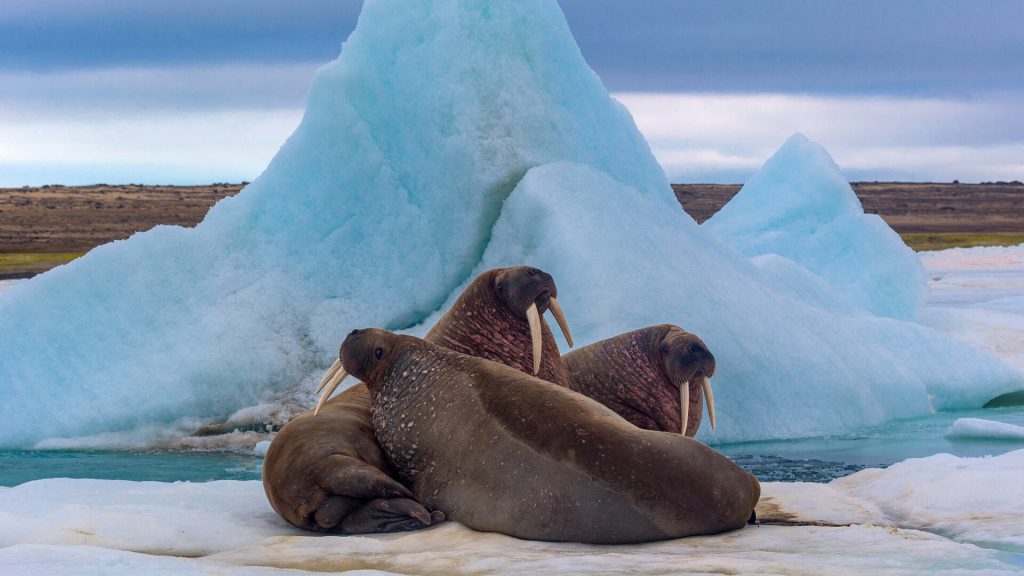
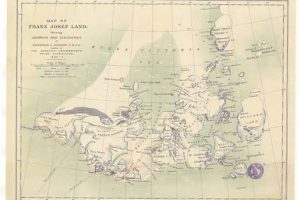
The Atlantic walrus (Odobenus rosmarus rosmarus) is the largest pinniped of the Arctic, famed for its tusks, whiskered snout, and reliance on sea ice for resting and breeding. In the high‑latitude archipelago of Franz Josef Land, the species forms one of the most remote and least‑studied components of the marine mammal community.
During the summer‑autumn of 2020–2021, a collaborative tagging program placed satellite‑linked radio transmitters on 26 individuals across the archipelago. The data revealed average daily travel distances of 29 ± 13.5 km, speeds of about 1.2 ± 0.6 km h⁻¹, and distinct movement patterns among males, females, and immatures. While walruses on Victoria Island remained localized, others traversed the entire archipelago and even migrated to Novaya Zemlya, confirming connectivity with the larger Kara‑Barents Sea population.
Foraging in Franz Josef Land is dominated by the bivalve Hiatella arctica, which comprised the bulk of macrobenthic biomass sampled near haul‑out sites. This benthic resource underpins the walrus’s role as a keystone predator, linking sea‑floor productivity to higher trophic levels.
Species Overview
Atlantic walruses belong to the family Odobenidae, order Carnivora. Adults reach lengths of 2.5–3.5 m and weigh up to 1,500 kg, with males bearing longer tusks (up to 1 m) used for dominance displays and hauling onto ice. Their thick, wrinkled skin and sparse hair provide insulation against frigid waters, while their highly developed vibrissae enable detection of prey within the sediment.
Distribution
The subspecies occupies the Atlantic sector of the Arctic, ranging from the coasts of Greenland and Canada to the Barents and Kara Seas. Within the Russian Arctic, the most northerly concentrations occur around the islands of Franz Josef Land, Novaya Zemlya, and the surrounding continental shelf.
Habitat in Franz Josef Land
Walruses use ice floes, glacier‑edge ridges, and the shallow coastal waters of most islands as haul‑out sites. Key locations include the ice‑free bays of Victoria Island, the western shores of Rudolf Island, and the shallow basins surrounding the central archipelago. Seasonal use peaks in late summer when sea ice retreats, exposing productive benthic habitats rich in bivalves.
Diet and Feeding
Walruses are benthic feeders, suction‑diving to depths of 20 m to extract mollusks, mainly bivalves. In Franz Josef Land, macrobenthic surveys identified Hiatella arctica as the dominant species, likely constituting the principal prey item for the tagged individuals (Solovyova et al., 2024).
Breeding and Life Cycle
Reproduction occurs on stable ice or land platforms in late winter. Females give birth to a single calf after a 15‑month gestation, nursing for up to 18 months. Calving sites in Franz Josef Land have not been extensively documented, but observations on neighboring islands suggest occasional use of sheltered ice floes.
Relationship to Sea Ice
Sea ice provides essential platforms for resting, breeding, and protection from predators. The recent decline in multi‑year ice in the Barents Sea has forced walruses to shift haul‑out locations, increasing reliance on ice‑free coastal zones such as those in Franz Josef Land. The migration of a tagged individual to Novaya Zemlya in November 2021 illustrates adaptive movement in response to ice dynamics.
Conservation Status
The Atlantic walrus is listed as Vulnerable on the IUCN Red List, primarily due to historic commercial hunting and contemporary threats from climate‑driven habitat loss. Franz Josef Land lies within the Russian Arctic National Park, affording legal protection to the species and its habitat, though enforcement remains challenging.
Research and Monitoring
The 2020–2021 satellite tagging effort, led by researchers from the University of Edinburgh and Russian institutions, represents the most comprehensive recent study of walrus movement in the archipelago. Data were collected over an average of 53 ± 27 days per individual, revealing sex‑specific travel patterns and a high‑biomass benthic food base (Solovyova et al., 2024). Ongoing monitoring includes aerial surveys, acoustic monitoring of vocalizations, and collaborative tagging projects involving the Russian Academy of Sciences.
Identification
| Feature | Atlantic Walrus (Odobenus rosmarus rosmarus) | Other Arctic Pinnipeds |
|---|---|---|
| Tusks | Long, curved, up to 1 m (males) | Absent in true seals; present but shorter in sea lions |
| Vibrissae | Dense, >200 whiskers per side | Fewer, less prominent |
| Size | 2.5–3.5 m length, 1,000–1,500 kg | Smaller; e.g., ringed seal 1.2 m, 100 kg |
| Skin | Thick, wrinkled, pinkish | Smoother, darker in seals |
FAQ
How many Atlantic walruses use Franz Josef Land?
Satellite tagging of 26 individuals in 2020‑2021 indicated a resident population that moves among islands, but precise numbers are unknown; estimates suggest several hundred use the archipelago seasonally.
What is the main food source for walruses in Franz Josef Land?
Benthic bivalves dominate the diet, with Hiatella arctica identified as the most abundant prey species in the surveyed foraging areas.
How does loss of sea ice affect Atlantic walruses in the archipelago?
Reduced multi‑year ice forces walruses to rely more on ice‑free coastal haul‑outs, alters migration routes, and may increase energetic costs as they travel farther to find suitable foraging grounds.


Leave a Reply