

Short Answer
The Fiala‑Ziegler Expedition, often called the Ziegler Polar Expedition of 1903–1905, was the second major venture funded by American industrialist William Ziegler after the unsuccessful Baldwin‑Ziegler attempt of 1901–1902. The expedition was commanded by Anthony Fiala, a photographer who had served on the previous mission, and it set out to reach the North Pole using a combination of dog sledges and ponies launched from Franz Josef Land.
Although the party never attained the pole, the expedition is notable for its prolonged isolation north of the Arctic Circle, the crushing of its steamship America in pack ice, and the extensive topographic surveys that refined the mapping of the archipelago. The experience also illustrated the logistical limits of early‑20th‑century polar logistics, particularly the difficulty of transporting sufficient fodder for large dog teams.
Who Was the Expedition
The venture was financed by William Ziegler (1844–1905), a wealthy American businessman who sought to sponsor a successful pole‑ward push after being dissatisfied with the results of the Baldwin‑Ziegler expedition led by Evelyn Baldwin. Ziegler selected Anthony Fiala (1869–1944) as leader; Fiala had been the official photographer on the Baldwin‑Ziegler mission and possessed practical field experience. The expedition’s second‑in‑command was William Peters, a seasoned mariner and polar veteran.
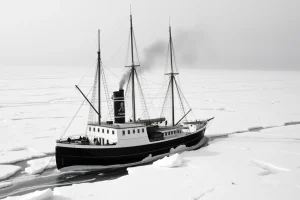
Thirty‑five men formed the core party, including scientists, dog‑handlers, engineers, and support staff. The expedition’s vessel was the three‑masted steamship America, refitted in Trondheim, Norway, and loaded with dogs, ponies, furs, and the depots left by earlier parties. The crew set sail from Vardø, Norway, on 10 July 1903.
Objectives
The primary goal was to achieve a successful sledge march to the Geographic North Pole from Franz Josef Land, improving on the earlier Baldwin attempt. Secondary objectives included:
- Establishing a permanent winter base at Teplitz Bay (Rudolf Island) for scientific observations.
- Conducting meteorological, magnetic, and astronomical measurements throughout the 1903–1905 period.
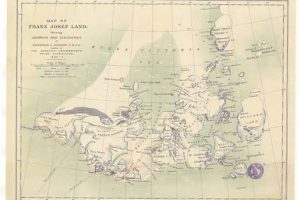
- Mapping the largely unknown coastlines and interior of Franz Josef Land, building on the charts of Payer (1874–75) and Jackson–Harmsworth (1895).
- Testing logistical innovations such as the use of ponies to supplement dog teams and feeding dogs on horse meat when supplies ran low.
Route
After departing Vardø, the America rounded the northern tip of Novaya Zemlya and entered the Barents Sea, arriving at Cape Flora on the southern edge of Franz Josef Land on 12 August 1903. The ship then proceeded northward, reaching a record latitude of 82° 13′ 50″ N near Rudolf Island, before turning back to establish winter quarters at Teplitz Bay (31 August 1903). The base, dubbed “Camp Abruzzi” after Prince Luigi Amedeo, Duke of the Abruzzi, comprised a wooden hut, a tent for animals, and an observatory built from salvaged supply boxes.
Following the crushing of the America by ice in November 1903 and the loss of many provisions in January 1904, the expedition launched a series of sledge attempts toward the pole in March 1904. Two attempts—first with 27 men on 7 March and a second with 14 men on 24 March—were aborted after only a few days due to injuries, inadequate equipment, and impassable ice. Subsequent attempts in May 1904 and again in March 1905 likewise failed, with the final poleward push ending six days after its start on 17 March 1905.
Throughout the winter, the party split into several camps: the main winter camp at Camp Abruzzi, a secondary group at Cape Flora using huts left by the Jackson‑Harmsworth expedition, and smaller scouting parties that explored Zichy Land and other islands. Rescue finally arrived when the British‑Finnish ship Terra Nova, under Captain Johan Kjeldsen, reached Cape Flora on 28 July 1905 and retrieved the surviving members.
Timeline
| Date | Event |
|---|---|
| 10 July 1903 | Departure of America from Vardø, Norway. |
| 12 August 1903 | Arrival at Cape Flora, Franz Josef Land; establishment of Camp Abruzzi. |
| 22 October 1903 | Ship’s moorings break; America drifts but is recovered. |
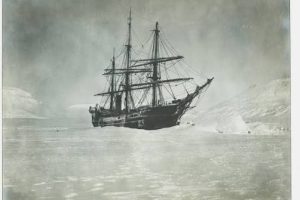
| November 1903 | Ice crushes America; cargo salvaged. |
| 7 March 1904 | First poleward sledge party (27 men) departs; turns back after 4 days. |
| 24 March 1904 | Second poleward party (14 men) departs; aborts after 2 days. |
| 1 May 1904 | Major retreat southward; most members reach Cape Flora. |
| 16 May 1904 | Death of Sigurd Myhre at Camp Abruzzi. |
| 17 March 1905 | Final poleward attempt (7 men); ends six days later. |
| 28 July 1905 | Rescue by Terra Nova; expedition members evacuated. |
The Franz Josef Land Connection
Franz Josef Land served both as the logistical springboard and the scientific laboratory for the expedition. The party used the archipelago’s numerous depots—left by the Abruzzi, the Baldwin‑Ziegler, and earlier Russian expeditions—to supplement their supplies. Their winter base at Teplitz Bay was situated on the north‑eastern shore of Rudolf Island (Ostrov Rudolfa), a strategic location that allowed observation of the surrounding pack ice and facilitated sledge routes toward the pole.
During the two‑year stay, the expedition conducted systematic topographic surveys of the islands of Zichy Land, Hall, and Prince George, producing maps that corrected earlier inaccuracies on Payer’s 1874 chart and Jackson’s 1895 map. Their observations of ice conditions, ocean currents, and atmospheric pressure contributed to the nascent field of polar meteorology.
Challenges and Hardships
The expedition faced a cascade of difficulties:
- Ice entrapment: The pack ice around Teplitz Bay was unusually thick, ultimately crushing the America and destroying much of the coal and provisions.
- Logistical miscalculations: Fiala’s estimate that an eight‑dog team required 1 100 lb of food proved untenable, as sled capacity was limited to 600 lb. The reliance on ponies added complexity, and the plan to feed dogs horse meat was only partially realized.
- Health problems: Scurvy and frostbite afflicted several members during the early sledge attempts; inadequate cooking equipment exacerbated the situation.
- Internal discord: Prolonged waiting for rescue at Cape Flora led to factionalism; some men refused to cooperate, fragmenting into separate camps.
- Weather extremes: Severe Arctic storms in January 1904 swept away supplies, and the polar night limited visibility and morale.
Discoveries and Achievements
Despite failing to reach the pole, the expedition yielded important outcomes:
- Extensive cartographic data that refined the coastline of Franz Josef Land and added previously unknown inland features.
- Discovery of a coal seam near Cape Flora by Anton Vedoe, which temporarily alleviated fuel shortages.
- Systematic meteorological records (temperature, pressure, wind) for two consecutive Arctic winters, providing a baseline for later climate studies.
- Photographic documentation of the archipelago’s landscape, ice formations, and the wreck of the America, many of which remain valuable historical images.
Outcome and Fate
The expedition concluded with the rescue of the remaining 30 survivors by the British‑Finnish vessel Terra Nova on 28 July 1905. Only one member, the Norwegian sailor Sigurd Myhre, died during the stay under unresolved circumstances. William Ziegler, the sponsor, died later that year, never witnessing a successful poleward reach. The expedition’s scientific reports were published in 1906 under the title The Ziegler Polar Expedition, 1903–1905, authored by Anthony Fiala.
Historical Significance
Historians view the Fiala‑Ziegler Expedition as a pivotal learning experience that highlighted the limits of early 20th‑century polar logistics and the importance of reliable depot networks. The failure to reach the pole spurred subsequent expeditions—most notably Roald Amundsen’s successful 1926 attempt—to adopt more rigorous sled‑load calculations and to prioritize wintering strategies that minimized exposure to pack‑ice pressure. Moreover, the detailed maps produced by Fiala’s team remained the authoritative reference for Franz Josef Land until Soviet aerial surveys in the 1930s.
Primary Sources
The principal documentary legacy of the expedition consists of Fiala’s narrative, published in 1906, which incorporates his own photographs, field notes, and the ship’s log. Additional primary material includes the official ship’s log of the America, preserved in the archives of the American Geographical Society, and a collection of meteorological data transmitted to the United States Weather Bureau. These sources have been digitized and are accessible through the Library of Congress and the National Archives.
Related Expeditions
The Fiala‑Ziegler venture directly followed the Baldwin‑Ziegler Expedition (1901–1902) and preceded the successful rescue of the Brusilov–Albanov party (1912–1914), which also wintered in Franz Josef Land. Later, the Soviet expedition of 1931–1932, led by Ivan Papanin, used many of the depots established by the Ziegler parties, demonstrating the lasting logistical impact of the 1903–1905 effort.
FAQ
What was the main goal of the Fiala‑Ziegler Expedition?
To reach the Geographic North Pole using sledges launched from Franz Josef Land, while also conducting scientific observations and mapping the archipelago.
Why did the expedition fail to reach the pole?
Severe ice conditions, injuries, inadequate equipment, and logistical miscalculations regarding food and sled capacity forced the sledge parties to turn back after only a few days.
How were the expedition members rescued?
The British‑Finnish ship Terra Nova, commanded by Captain Johan Kjeldsen, reached Cape Flora on 28 July 1905 and evacuated the surviving members.
Did any members die during the expedition?
Only one member, Norwegian sailor Sigurd Myhre, died at Camp Abruzzi in May 1904 under unresolved circumstances; all other participants survived.


Leave a Reply