
Short Answer
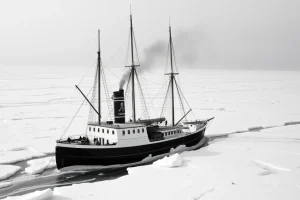
Stella Polare was a steam‑powered whaling ship built in Oslo and purchased in 1899 by Prince Luigi Amedeo, Duke of the Abruzzi, a noted Italian mountaineer and explorer. Renamed “Southern Star,” the vessel became the centerpiece of the Italian Arctic expedition that sought to reach the highest possible latitude in the high Arctic, possibly the North Pole, and to carry out a systematic scientific survey of Franz Josef Land.
The expedition, launched in the summer of 1899, wintered on the sea‑ice of Franz Josef Land and employed dog‑sledges for over‑ice travel. Its crew famously used explosives to free Stella Polare after the ship became trapped in thick pack ice, an episode documented in the expedition’s published narrative. The venture returned to Italy in 1902, leaving a lasting legacy in polar cartography and scientific observation.
Who Was Prince Luigi Amedeo / The Expedition
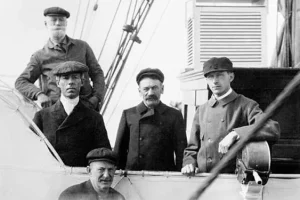
Prince Luigi Amedeo di Savoia (1873–1933) was the grandson of King Vittorio Emanuele II of Italy. A celebrated mountaineer, he had previously led successful ascents in the Alps and the Himalayas. In 1899 he organized an Arctic venture, assembling a multinational crew that included Italian officers, Norwegian sailors, and experienced Arctic hunters. The expedition’s official name was the “Italian North Pole Expedition,” and its principal vessel was the newly renamed Stella Polare.
Objectives
The stated aims of the expedition were threefold:

- To reach the highest possible latitude in the Arctic, with a view to possibly attaining the North Pole.
- To winter on the ice of Franz Josef Land and use dog‑sledges for further northward sledge journeys.
- To conduct a comprehensive scientific program, including meteorology, magnetic observations, geology, and biology, across the largely unknown archipelago.
Route
The expedition departed Oslo in late summer 1899, sailing northward via the Barents Sea. After traversing the open waters of the Arctic Ocean, Stella Polare entered the waters of Franz Josef Land in early autumn 1900. The ship deliberately allowed itself to become ice‑bound near the north‑eastern coast of the archipelago, establishing a winter camp on the ice floe that later merged with the coast of what is now known as Rudolf Island. During the winter months (1900‑1901) the crew launched sledge parties that explored the surrounding islands, mapped coastlines, and collected geological and biological specimens. In the spring of 1901 the ship was freed from the ice and steamed southward, stopping at several ports for resupply before returning to Italy in the summer of 1902.
Timeline
| Date | Event |
|---|---|
| July 1899 | Acquisition of a Norwegian steam whaler in Oslo; renamed Stella Polare. |
| August 1899 | Departure from Oslo under Prince Luigi Amedeo’s command. |
| September 1900 | Arrival in the waters of Franz Josef Land; ship intentionally ice‑bound near Rudolf Island. |
| Winter 1900‑1901 | Wintering on pack ice; scientific observations and sledge explorations conducted. |
| April 1901 | Use of explosives to break free from pack ice; ship regains mobility. |
| May 1901 | Departure from Franz Josef Land; return voyage via the Barents Sea. |
| July 1902 | Return to Naples; publication of the Italian narrative. |
The Franz Josef Land Connection
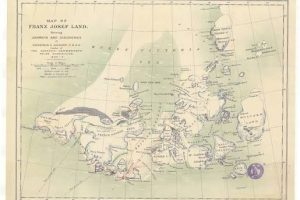
Stella Polare’s most significant geographic interaction was its wintering on the sea‑ice adjacent to Rudolf Island, the northernmost island of the archipelago. The ship’s presence allowed the expedition to make the first systematic surveys of several islands, including Hall, Ziegler, and Hall’s southern coast. The sledge parties charted previously unknown capes such as Cape Armitage and surveyed inlet bays like Tikhaya Bay. These observations were incorporated into the first detailed maps of Franz Josef Land produced after the Austro‑Hungarian Tegetthoff expedition of 1873.
Challenges and Hardships
The expedition faced extreme Arctic conditions: polar night, temperatures below –30 °C, and unpredictable pack‑ice movements. In late 1900 the ship became immobilised in multi‑year ice, threatening the crew’s supplies. To free the vessel, the crew placed dynamite charges against the ice, a risky operation that succeeded after several attempts. Scurvy threatened the men during the long winter, mitigated only by limited fresh provisions and the occasional seal hunt. Mechanical failures of the steam engine required on‑board repairs in sub‑zero temperatures.
Discoveries and Achievements
Although the expedition did not reach the geographic North Pole, it set an Italian latitude record of 86° 34′ N, achieved during a sledge push from the winter camp. The scientific program yielded valuable data: continuous meteorological records for two Arctic winters, magnetic declination measurements that refined the World Magnetic Model, and a collection of Jurassic–Cretaceous marine fossils that later contributed to the understanding of the archipelago’s geological history. The expedition’s cartographic output added dozens of previously unmapped coastal features to the emerging maps of the high Arctic.
Outcome and Fate
Stella Polare returned to Italy in July 1902, where the ship was refitted and eventually sold back to Norwegian owners for commercial whaling. Prince Luigi Amedeo continued his polar pursuits, later leading the 1909–1912 Italian Antarctic expedition aboard the research vessel *Yelcho*. The narrative of the 1900–1902 expedition was first published in Italian in 1902 and translated into English by William Le Queux in 1903, providing a detailed account for future explorers.
Historical Significance
Historians regard the Stella Polare expedition as a pivotal moment in early 20th‑century polar exploration. It demonstrated that a relatively small steam‑powered vessel could survive a winter in high‑latitude ice, influencing later designs for polar ships. The scientific data collected filled critical gaps in Arctic meteorology and magnetism, and the expedition’s maps were incorporated into the International Hydrographic Organization’s charts of the Barents Sea. Moreover, the dramatic ice‑breaking operation illustrated the lengths to which explorers would go to maintain mobility in the unforgiving Arctic environment.
Primary Sources
The principal primary source is the two‑volume narrative authored by Prince Luigi Amedeo, originally published in Italian in 1902 and translated into English by William Le Queux in 1903. The manuscript includes ship logs, meteorological tables, and detailed maps drawn by the expedition’s cartographers. Additional sources include contemporary newspaper reports from *Corriere della Sera* and archival material held by the Italian Geographic Society, which preserve the original dynamite‑charge plans and crew diaries.
Related Expeditions
Stella Polare’s venture built upon earlier Arctic forays, notably the Austro‑Hungarian North‑Pole Expedition (1872–1874) that first sighted Franz Josef Land. It preceded the 1901–1903 Baldwin–Ziegler Expedition, which also attempted a high‑latitude push from the same archipelago, and the 1902 Cagni march from Rudolf Island that finally reached 86° 34′ N, a record that stood for decades. The Italian expedition’s scientific legacy informed later Soviet research stations established on Franz Josef Land in the 1920s and 1930s.
FAQ
What was Stella Polare before the Italian expedition?
It was a Norwegian steam‑powered whaling vessel built in Oslo and purchased in 1899 for conversion to an Arctic exploration ship.
How did the crew free the ship when it became trapped in pack ice?
The crew placed dynamite charges against the surrounding ice and detonated them, breaking a channel that allowed Stella Polare to resume movement.
Did the expedition reach the North Pole?
No, the expedition did not reach the geographic North Pole, but it achieved a record latitude of 86°34′ N for Italy during a sledge push from the winter camp.


Leave a Reply