Short Answer
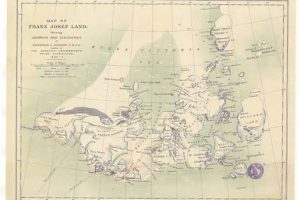
Franz Josef Land (Russian: Земля Франца‑Иосифа) is a high‑Arctic archipelago of roughly 190 islands situated between 80° and 81° N in the Barents Sea. Its extreme latitude, pervasive glaciation, and short growing season limit vascular vegetation to a narrow belt of ice‑free ground, yet the islands host a surprisingly diverse flora for such a setting.
Botanical interest in the archipelago dates back to the late 19th‑century expeditions of Austro‑Hungarian and British explorers, who recorded only a handful of mosses and lichens. Systematic surveys were impossible until the Soviet era, when a few scientific parties visited isolated coastal sites. The most comprehensive modern inventory was carried out in 2011, when a team of Russian botanists visited Cape Sedov on Hooker Island and several neighboring locations, producing the first quantitative list of vascular plants for the whole archipelago.
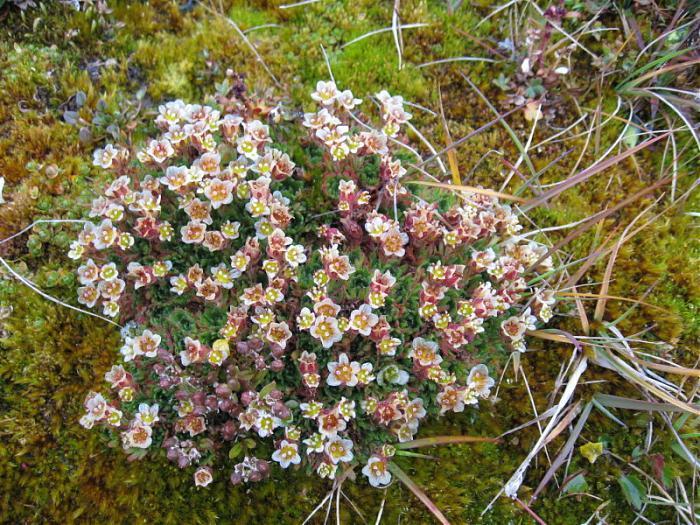
The 2011 expedition identified 25 species of vascular plants, representing about half of the 57 species previously reported from scattered historical notes. Among these, Draba fladnizensis Wulfen was recorded for the first time on Franz Josef Land, extending the known range of this alpine species. Rare Arctic specialists such as Potentilla hyparctica, Oxyria digyna, and Saxifraga platysepala were also documented, while no alien species were found in the few human‑made habitats examined.
Study Area
The study focused on the western and central sectors of the archipelago where ice‑free ground is most extensive. Primary sites included:
- Cape Sedov, Hooker Island (80°33′37″ N, 52°77′6″ E)
- The southern slope of Roubini Rock (80°18′54″ N, 52°50′12″ E)
- South‑east coast of Scott‑Keltie Island (80°19′29″ N, 52°33′31″ E)
These locations lie within the Russian Arctic National Park, a protected area established in 2009 that restricts permanent settlement and regulates tourist landings.
What Scientists Measure
The 2011 team employed standard Arctic botanical protocols: systematic quadrat sampling across coastal moraines, talus fields, and sheltered depressions; voucher collection for herbarium deposition; and GPS logging of each specimen’s coordinates. Species presence/absence, phenological stage, and associated substrate (e.g., sandy, gravelly, or silty) were recorded. In addition, the researchers noted the degree of disturbance (natural, tourist‑impacted, or man‑made) to assess the resilience of native vegetation.
Historical Evidence
Early Arctic explorers such as Julius Payer (1874–75) and Benjamin Leigh Smith (1880s) mentioned only “sparse vegetation” in their logs, reflecting the limited time they spent ashore and the dominance of mosses and lichens. The first botanical collections of higher plants were made by the Soviet expedition to Tikhaya Bay in 1929, but those specimens were few and never fully published. Consequently, the archipelago’s vascular flora remained largely anecdotal until the systematic 2011 survey.
Recent Research
The 2011 fieldwork resulted in a peer‑reviewed synthesis (Churakova et al., 2014) that provides the most reliable species list to date. The authors highlighted several ecological patterns:
- Most species are short‑statured, perennial herbs adapted to a brief summer (June–August) and to wind‑driven, nutrient‑poor soils.
- Species richness is highest on south‑facing slopes where solar radiation is maximal.
- Disturbed sites, such as tourist landing zones, are colonised exclusively by native pioneer species like Cardamine bellidifolia and Saxifraga cespitosa.
- Commonly abundant species in natural habitats, for example Alopecurus alpinus and Ranunculus sulphureus, were absent from transformed areas, suggesting sensitivity to trampling.
No non‑native vascular plants were detected, indicating that the archipelago’s extreme isolation continues to shield its flora from accidental introductions.
What Has Changed
Comparisons with the limited historical records suggest a modest increase in documented species, largely due to improved sampling effort rather than genuine range expansions. However, climate‑induced changes are already observable:
- Longer melt periods have expanded the spatial extent of ice‑free ground by an estimated 5–10 % over the past three decades, based on satellite analyses of glacier margins.
- Warmer summer air temperatures (average increase of ≈1.2 °C since 1980) have lengthened the growing season, potentially allowing marginal species such as Draba fladnizensis to establish.
- Increased tourist visitation since the early 2000s has created small disturbed patches that are now vegetated by native pioneer taxa, but the overall impact remains low compared with the archipelago’s total area.
Uncertainty and Open Questions
Key knowledge gaps persist:
- Long‑term population trends for individual species are unknown because baseline quantitative data are lacking.
- The reproductive ecology of many taxa (seed set, dispersal mechanisms) has never been studied in situ.
- Potential northward migration of sub‑Arctic species under future warming scenarios remains speculative.
- Genetic diversity within isolated populations is uncharacterised, limiting assessments of their resilience.
Future research priorities include establishing permanent vegetation plots, conducting repeat phenological monitoring, and applying molecular tools to resolve population structure.
Data Sources
Primary data stem from the 2011 field campaign (GPS‑tagged specimen records deposited at the Komarov Botanical Institute, St. Petersburg). Supplementary information derives from Soviet-era herbarium sheets, satellite imagery of glacier retreat (Landsat series), and climate records maintained by the Russian Federal Service for Hydrometeorology and Environmental Monitoring (Roshydromet). The International Union for Conservation of Nature (IUCN) Red List provides conservation status for each species.
Species List (selected)
| Rare / Notable Species | Habitat |
|---|---|
| Draba fladnizensis Wulfen | Rocky scree on Hooker Island; new record for the archipelago |
| Potentilla hyparctica (L.) A. Koch | South‑facing slopes of Roubini Rock |
| Oxyria digyna L. | Moist depressions near bird colonies |
| Saxifraga platysepala Kurtto | Granite outcrops on Scott‑Keltie Island |
Common pioneer species observed in disturbed areas include Cardamine bellidifolia, Cerastium regelii, Luzula nivalis, Papaver polare, Phippsia algida, Saxifraga cespitosa, Saxifraga cernua, and Stellaria edwardsii. Species such as Alopecurus alpinus and Ranunculus sulphureus were conspicuous in pristine habitats but absent from the small tourist‑impacted zones.
FAQ
How many vascular plant species are known from Franz Josef Land?
As of the 2011 survey, 25 species have been documented, representing roughly half of the 57 species mentioned in earlier scattered records.
Is there any evidence of non‑native plants establishing on the islands?
No alien vascular plant species were found in the surveyed natural or man‑made habitats, indicating that the archipelago remains isolated from accidental introductions.
What factors limit plant growth on Franz Josef Land?
Extreme latitude, pervasive glaciation, a very short summer, low nutrient soils, and strong winds restrict vegetation to ice‑free microhabitats such as south‑facing slopes, rock crevices, and coastal moraines.


Leave a Reply