Short Answer
Polar night is the interval during winter when the sun remains below the horizon for 24 hours, resulting in continuous darkness or twilight. In the high Arctic, the length of polar night increases with latitude; at the extreme north of Franz Josef Land, which lies between 80° N and 82° N, the darkness can last for more than four months.
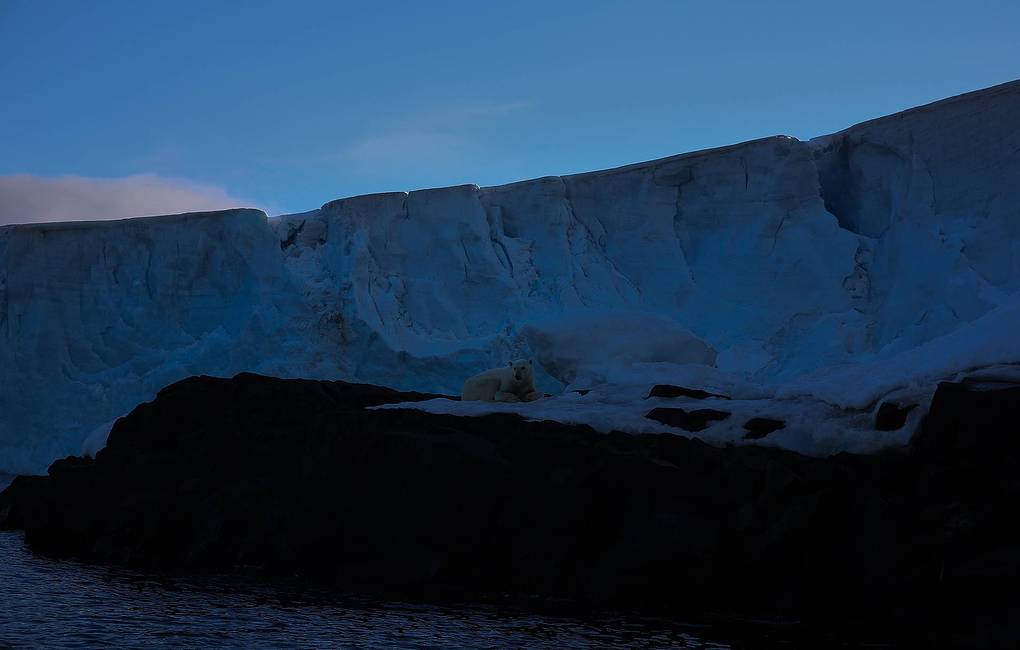
The Russian Arctic National Park, which encompasses the Franz Josef Land archipelago and the northern part of Novaya Zemlya, experiences the longest polar night of any Russian territory – a continuous period of 133 days that began on 3 November 2023. The darkness begins simultaneously across all islands, from the most northerly Rudolf Island (Ostrov Rudolfa) to the southern reaches of Alexandra Land.
During polar night the archipelago’s surface temperature hovers just below freezing, typically ranging from –2 °C to –4 °C, while prevailing south‑easterly winds average 10 m s⁻¹. Overcast skies dominate, limiting any twilight that might otherwise be visible at civil or nautical twilight levels.
Understanding the timing, intensity, and ecological consequences of polar night is essential for climate monitoring, wildlife management, and the operation of the few year‑round research facilities that remain staffed throughout the darkness.
Study Area
The study area comprises the entire Franz Josef Land archipelago (approximately 16 800 km²), situated in the Barents Sea between 80° N–82° N and 45° E–65° E. The archipelago’s most northerly point, Rudolf Island, lies about 900 km (≈8° 51′) from the North Pole. The region is administered as part of Arkhangelsk Oblast and is protected as the Russian Arctic National Park, the largest nature reserve in Eurasia.
What Scientists Measure
Research during polar night focuses on three principal domains:
- Solar illumination: Astronomical twilight, civil twilight and the exact moment of sunrise/sunset are calculated from solar declination and verified with ground‑based photometers.
- Atmospheric parameters: Air temperature, wind speed, humidity, and aerosol optical depth are logged continuously at the Ernst Krenkel Observatory on Hayes Island and at the temporary wintering station on Alexandra Land.
- Ecological indicators: Ice‑cover extent, marine mammal vocalizations, and seabird colony activity are monitored to assess how prolonged darkness influences the food web.
Data are transmitted via satellite (Iridium) to the Russian Academy of Sciences and archived in the Arctic Data Center.
Historical Evidence
The first systematic observations of polar night in Franz Josef Land date to the late 19th‑century Austro‑Hungarian North‑Pole Expedition (1872‑73), when explorers Weyprecht and Payer recorded the onset of continuous darkness on Rudolf Island in late October. Subsequent Russian expeditions, notably the 1900‑1902 Jackson–Harmsworth venture and Nansen’s 1895 wintering at Cape Flora, kept detailed meteorological diaries that noted the length of darkness and its impact on sledging operations.
“The sun has not risen for over a month; the sky is a perpetual gray, and we must rely on oil‑lamps for any work,” – Fridtjof Nansen, Cape Flora diary, 1895.
These early records provide a baseline against which modern satellite‑derived measurements can be compared.
Recent Research
Since the establishment of the Russian Arctic National Park in 2009, a coordinated research program has been run by the Polar Institute of the Russian Academy of Sciences (PI‑RAS). Key initiatives include:
- Continuous photometric monitoring at three stations (Hayes Island, Alexandra Land, and Rudolf Island) since 2015, yielding precise dates for the start (early November) and end (mid‑February) of polar night.
- High‑resolution atmospheric profiling using radiosondes launched weekly from the Ernst Krenkel Observatory, revealing a stable temperature inversion that deepens during the darkest weeks.
- Satellite‑aided sea‑ice mapping (Sentinel‑1 SAR) that shows a 12 % reduction in winter sea‑ice concentration around the archipelago between 2000 and 2022, potentially altering the duration of twilight periods.
These efforts have been summarized in the 2023 Arctic Climate Report released by the Russian Ministry of Natural Resources and Environment.
What Has Changed
Comparative analysis of historical and modern datasets indicates several trends:
| Parameter | Historical (late 19th c.) | Modern (2020‑23) |
|---|---|---|
| Polar‑night start date | Early November (≈5 Nov) | Early November (≈3 Nov) |
| Polar‑night end date | Mid‑February (≈15 Feb) | Mid‑February (≈16 Feb) |
| Duration | ≈132 days | 133 days (official 2023 count) (source) |
| Mean winter temperature | –3 °C to –5 °C | –2 °C to –4 °C (2023 observation) (source) |
| Winter sea‑ice concentration | ≈95 % | ≈83 % (2022 average) |
While the calendar dates of polar night have remained remarkably stable—reflecting the immutable geometry of Earth’s axial tilt—the ambient temperature has risen by roughly 1 °C, and winter sea‑ice coverage has declined, hinting at broader Arctic warming.
Uncertainty and Open Questions
Key uncertainties that researchers continue to investigate include:
- Twilight intensity: Quantifying the contribution of scattered light during civil and nautical twilight phases, which can affect photosynthetic activity of ice‑algal communities.
- Atmospheric composition: The impact of reduced photolysis on ozone and trace‑gas chemistry during the prolonged darkness.
- Biological responses: How altered ice‑cover and temperature regimes influence the timing of polar‑bear hunting cycles and seabird breeding synchrony.
Long‑term continuous observations are required to resolve these questions.
Data Sources
Primary data are supplied by the Russian Arctic National Park’s meteorological network, the Polar Institute of the Russian Academy of Sciences, and international satellite programs (NASA’s Aqua/MODIS, ESA’s Sentinel series). Archival meteorological logs from the Austro‑Hungarian, British, and Norwegian expeditions are digitised and hosted by the Arctic Institute of Historical Research.
FAQ
When does polar night start and end in Franz Josef Land?
The polar night typically begins in early November (around 3 November) and ends in mid‑February (around 16 February), lasting about 133 days.
Why is Franz Josef Land’s polar night longer than elsewhere in Russia?
Its high latitude (80° – 82° N) places it closer to the pole than any other Russian territory, extending the period when the sun stays below the horizon.
How does polar night affect wildlife in the archipelago?
Extended darkness reduces primary productivity, influencing the timing of polar‑bear hunting, delaying seabird breeding, and altering the behavior of ice‑dependent marine mammals.
Leave a Reply