

Short Answer
Franz Josef Land, an isolated high‑Arctic archipelago in the Barents Sea, supports a dense and diverse assemblage of seabirds. The islands’ sheer cliffs, tundra‑covered slopes and ice‑free coastal plains provide nesting habitat for species ranging from the globally rare ivory gull (Pagophila eburnea) to abundant gulls and auks. Because the archipelago lies at the northern limit of many species’ breeding ranges, its colonies are key indicators of Arctic ecosystem health and are integral to the food web that sustains polar bears, walruses and marine mammals.
Historical surveys conducted during the Soviet VNIIPriroda expedition of 1980‑81 recorded 37–38 seabird species, of which 14 were confirmed breeders and the rock ptarmigan was likely a permanent resident. The most notable colonies were those of the ivory gull, which at the time represented the largest nesting aggregations in the USSR, and the extensive cliff colonies of little auks, Brünnich’s guillemots, black guillemots, fulmars and kittiwakes, totaling more than 60 major sites【1】.
Species Overview
Seabirds of Franz Josef Land belong to several families within the orders Charadriiformes and Pelecaniformes. The most abundant and ecologically significant groups are:
- Ivory gull (Pagophila eburnea) – a globally endangered species that nests on high, ice‑free cliffs.
- Little auk (Alle alle) – the most numerous Arctic seabird, forming dense colonies on low cliffs and scree.
- Brünnich’s guillemot (Uria lomvia) and black guillemot (Cepphus grylle) – cliff‑nesting divers that rely on nearby open water for feeding.
- Northern fulmar (Fulmarus glacialis) – a pelagic species that breeds on ledges and cliffs.
- Black‑throated diver (Gavia arctica) and red‑throated diver (Gavia stellata) – diving waterbirds that nest on small freshwater lakes.
- Common and Arctic kittiwakes (Rissa tridactyla, Rissa arctica) – cliff‑nesting gulls that dominate many of the archipelago’s sheer faces.
Distribution
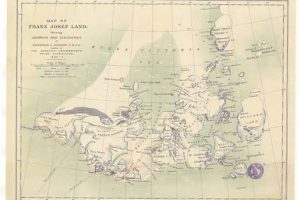
All recorded seabird species are circumpolar, but their presence in Franz Josef Land is concentrated on the western and northern islands where ice‑free cliffs are most extensive. Key breeding islands include:
- Hooker Island – major colonies of little auks and guillemots.
- Graham Bell Island – nesting sites for ivory gulls, red‑throated divers and black‑throated divers.
- Rudolf Island (Ostrov Rudolfa) – historic ivory gull colonies documented in the 1980s.
- Bell, Mabel, Koettlitz, Scott‑Keltie, Newton and Hovgaard islands – confirmed red‑throated diver nests【1】.
Outside the breeding season, many species disperse widely across the Barents Sea, following the seasonal formation of polynyas and open water.
Habitat in Franz Josef Land
Breeding habitats fall into three main categories:
- Cliff ledges and sea‑cliffs – used by gulls, auks, guillemots and fulmars; these sites provide protection from terrestrial predators and proximity to feeding grounds.
- Freshwater lakes and ponds – small, shallow bodies on islands such as Hooker and Graham Bell support diver colonies; these lakes often freeze early, limiting the breeding window.
- Tundra‑covered plateaus – low‑lying, ice‑free areas where little auks and kittiwakes may nest in crevices or under boulders.
Diet and Feeding
Seabirds in the archipelago are primarily piscivorous, exploiting the rich pelagic fish stocks (e.g., polar cod, capelin) and zooplankton of the Barents Sea. Diver species (Gavia spp.) dive to depths of 10–30 m to capture fish and invertebrates, while auks and guillemots forage in the upper water column, often in association with sea‑ice edge concentrations of zooplankton. Fulmars and kittiwakes are opportunistic surface feeders, taking fish, squid and carrion.
Breeding and Life Cycle
Breeding in Franz Josef Land is tightly constrained by the short Arctic summer. Arrival dates vary by species and island, but typical patterns are:
- Red‑throated diver – first observed on Hooker Island 18–20 June; breeding peaks late June, with occasional late‑season clutches in early July【1】.
- Black‑throated diver – first recorded on Graham Bell Island 16 July 1981【1】.
- Northern fulmar – arrival linked to coastal polynyas, earliest records 13 March; mass arrivals in late May【1】.
- Ivory gull – nests in late May to early June; clutch size typically two eggs; both parents share incubation (≈ 28 days) and chick‑rearing.
- Little auk – colonies establish in early June; females lay a single egg; chicks fledge by late July.
Incubation periods range from 28 days (divers) to 35 days (gulls). Fledging occurs 30–45 days after hatching, after which juveniles disperse to sea‑ice foraging.
Relationship to Sea Ice
Sea‑ice dynamics directly affect foraging success. Species such as the ivory gull and divers depend on the presence of seasonal ice edges where fish concentrate. Early melt or reduced ice cover can advance arrival dates but also compress the breeding window, potentially reducing chick survival. Conversely, extensive ice can limit access to open water, forcing birds to travel longer distances.
Conservation Status
Most seabirds of Franz Josef Land are listed as Least Concern by the IUCN, but a few are threatened:
- Ivory gull – Vulnerable (IUCN 2022); the archipelago hosts one of the world’s largest breeding populations, making it a conservation priority.
- Red‑throated diver – Near‑Threatened due to habitat loss in the Arctic.
The entire archipelago is part of the Russian Arctic National Park (established 2009), providing legal protection to nesting colonies. Soviet‑era proposals for a nature reserve highlighted the need to safeguard the ivory gull colonies and the extensive cliff colonies of auks and guillemots【1】.
Research and Monitoring
Systematic seabird monitoring began with Soviet aerial surveys in the 1980s, which mapped colony locations and estimated population sizes. Modern programs involve satellite imagery, unmanned aerial vehicles (UAVs) and on‑site counts conducted by the Russian Academy of Sciences and international partners such as BirdLife International. Tagging studies on ivory gulls have revealed long‑distance movements between Franz Josef Land and other Barents Sea breeding sites.
Identification
| Species | Key Field Marks | Similar Species |
|---|---|---|
| Ivory gull (Pagophila eburnea) | Pure white plumage, black wingtips, yellowish bill | Snowy owl (non‑seabird), but gull is larger and has webbed feet |
| Little auk (Alle alle) | Black head, white underparts, short black bill | Common murre (longer bill, darker back) |
| Brünnich’s guillemot (Uria lomvia) | Black head, white neck patch, dark back, orange‑yellow gape | Common murre (no neck patch) |
| Black‑throated diver (Gavia arctica) | Black throat, white underparts, long thin neck | Red‑throated diver (red throat patch) |
| Red‑throated diver (Gavia stellata) | Red throat patch, black head, white underparts | Black‑throated diver (no red patch) |
FAQ
Which seabird species has the largest breeding colony in Franz Josef Land?
The ivory gull (Pagophila eburnea) supports the largest known nesting aggregation in the archipelago, identified during Soviet surveys in the early 1980s.
When do seabirds typically arrive to breed on Franz Josef Land?
Arrival varies by species; red‑throated divers appear mid‑June, black‑throated divers in mid‑July, while northern fulmars can arrive as early as March when coastal polynyas develop.
How does sea‑ice change affect seabird breeding success?
Sea‑ice influences foraging distance and prey availability. Early melt can shorten the breeding window, while extensive ice can force birds to travel farther to open water, reducing chick survival rates.




Leave a Reply